












































Table of Contents
- What Are Appliance Sets and Why Buyers Consider Them
- Kitchen Appliance Package Deals: Cost Breakdown and Real Savings
- Aesthetic Consistency and Design Matching Across Your Kitchen
- Mixing Appliance Brands in the Kitchen: Flexibility and Trade-Offs
- How to Choose Kitchen Appliances on a Budget: A Practical Framework
- Servicing, Warranty Coverage, and Long-Term Maintenance Benefits
- Appliance Sets Versus Individual Purchases: When Each Makes Sense
- Conclusion
Last Updated: August 28, 2026
What Are Appliance Sets and Why Buyers Consider Them
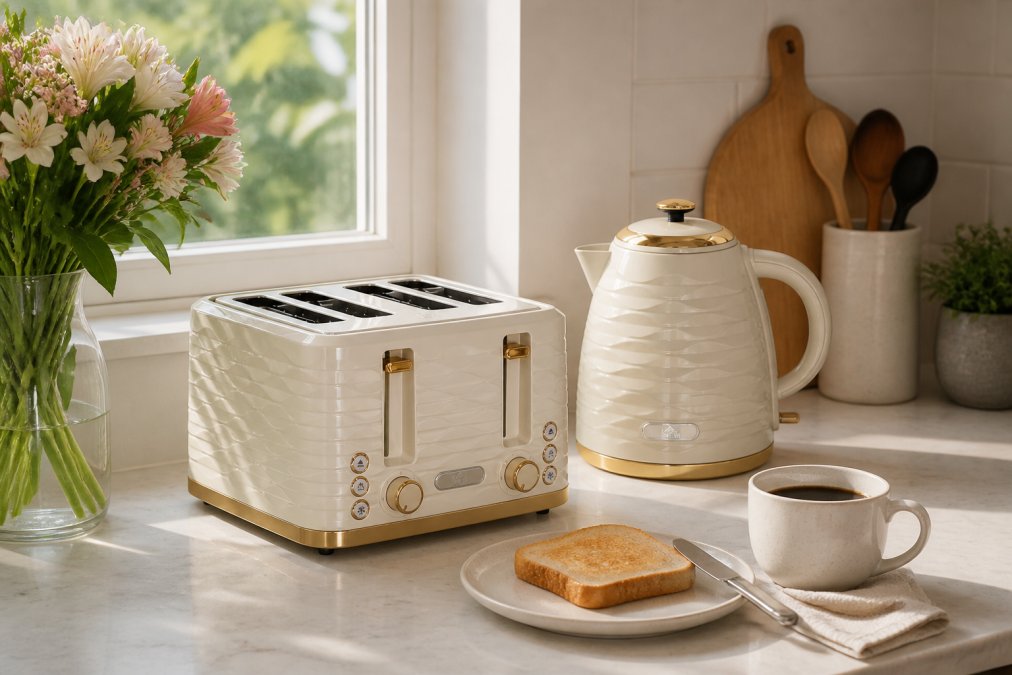
Appliance sets pair two or more kitchen appliances in matching finishes and designs, sold together as a bundle. The appeal is straightforward: coordinated aesthetics, simplified shopping, and often a modest discount compared to buying each unit separately. For young professionals setting up their first flat or families refreshing a tired kitchen, a matched kettle and toaster set removes decision fatigue and delivers visual cohesion. But for those with specific performance needs or existing appliances you want to keep, individual purchases often win.

This guide breaks down the financial, aesthetic, and practical trade-offs so you can make a choice backed by actual use cases, not marketing pressure.
Kitchen Appliance Package Deals: Cost Breakdown and Real Savings
Bundle deals typically save you between 5-15% compared to buying appliances separately. Where bundles genuinely make sense financially is when you're buying three or more appliances. A matched kitchen suite with kettle, toaster, microwave, and coffee maker in coordinated finishes creates real savings because manufacturers bundle slower-moving items with bestsellers to clear inventory.
The hidden cost, however, is feature parity. Sets often pair a premium kettle with a basic toaster, or vice versa. You're not always getting the best-performing unit in each category; you're getting a balanced offering that appeals to the broadest audience. Individual purchases let you allocate your budget where it matters most.
Consider your actual usage pattern. If you make toast twice a week and tea five times daily, spending more on a superior kettle whilst accepting a mid-range toaster makes financial and practical sense. Sets don't allow that granularity.
Aesthetic Consistency and Design Matching Across Your Kitchen
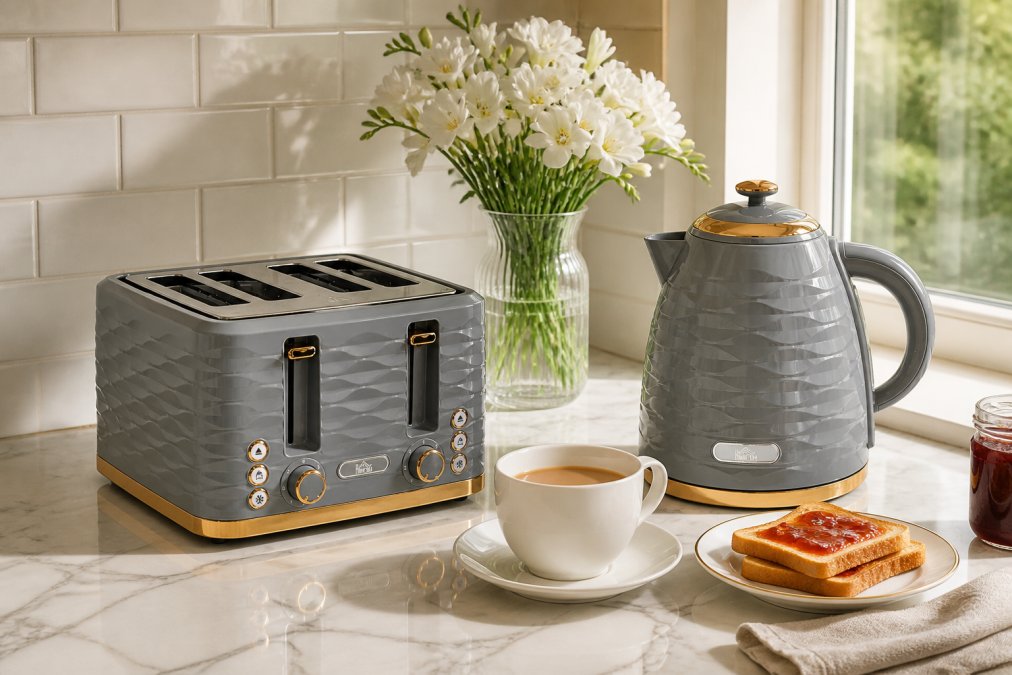
This is where sets deliver immediate, tangible value. A coordinated kettle and toaster in matching stainless steel or cream finishes creates visual unity on your countertop. It signals intentionality, that your kitchen is a considered space rather than a random assembly of whatever was on sale.
Mixing brands, by contrast, introduces visual noise. A brushed-steel kettle next to a glossy black toaster next to a chrome coffee maker creates clutter, even if each appliance is excellent. For renters or those in small flats where kitchen visibility is high, aesthetic consistency matters psychologically, it makes the space feel intentional and finished.
The trade-off: sets limit your colour and finish options. If you want a specific shade or particular handle style, you're unlikely to find it in a matched set. Individual purchases give you total design freedom.
Mixing Appliance Brands in the Kitchen: Flexibility and Trade-Offs
Individual purchases unlock flexibility that sets cannot offer. You can pair a premium kettle with a budget toaster, or choose appliances optimised for your specific needs, a compact air fryer for a studio flat, a high-capacity blender for a family household.
The aesthetic trade-off is manageable. A kitchen with mixed-brand appliances looks intentional if you limit your finishes to two: stainless steel plus black, or cream plus brushed metal. Within those constraints, mix freely.
Functionally, mixing brands often delivers better overall performance. You're not compromising on the toaster to stay within a bundle's price point. You're choosing the best kettle for your needs and the best toaster for yours, even if they come from different manufacturers.
For those with existing appliances, mixing is essential. You can't replace a perfectly functional kettle just because you want a new toaster to match. Individual purchases let you upgrade one appliance at a time as older units reach the end of their lifecycle.
How to Choose Kitchen Appliances on a Budget: A Practical Framework
The decision between sets and individual purchases depends on three concrete factors: your household type, your timeline, and your space constraints.
Household Type and Usage Patterns
Start by mapping your real appliance usage. A family that makes toast daily and boils water five times daily has different needs than a professional couple who eat out frequently. Document how often each appliance gets used and which features matter most.
If you use a kettle constantly, a superior model with fast boil times justifies higher spending. If you make toast twice weekly, a mid-range toaster is perfectly adequate. Sets force equal budget allocation across appliances regardless of usage. Individual purchases let you spend more on a premium kettle and less on a functional toaster.
For families with young children, durability and safety features matter more than aesthetics. For renters in shared flats, compact footprints and visual cohesion matter more than long-term durability.
Timeline and Space Constraints
If you're moving house within three months, a set eliminates coordination headaches. You order once, everything arrives together, and you install and move on. If you're in a compact kitchen or studio flat, visual clutter affects how spacious your environment feels. A matched kettle and toaster take up less psychological space than two visually unrelated appliances.
If you have existing appliances you want to keep, individual purchases are essential. You can't justify replacing a perfectly functional kettle just to match a new toaster.
Home Resale Value and Long-Term Considerations
Matched appliance suites can positively influence home appraisals and buyer appeal. Buyers viewing a kitchen with coordinated appliances perceive it as intentional and well-maintained. For homeowners planning to sell within 5-10 years, a cohesive appliance suite creates visual appeal that translates to perceived value. For those staying longer, individual purchases offer flexibility to upgrade strategically.
Budget Allocation Strategy
Set your total budget, then allocate it based on usage frequency and importance, not evenly across appliances. If you have £150:
- High-usage appliance (kettle, if you drink multiple cups daily): 50-60% of budget
- Medium-usage appliance (toaster, if you make toast 3-4 times weekly): 30-40% of budget
- Low-usage appliance (microwave, if you use it occasionally): 10-20% of budget
This allocation is impossible with sets, which distribute cost evenly. Individual purchases let you optimise spending for your actual lifestyle.
Research and Verification
Read user feedback from multiple sources. Appliances that look identical in marketing photos perform differently in real kitchens. Check whether a model heats evenly, whether controls are intuitive, and whether it's genuinely durable. Look for reviews mentioning longevity, not just initial impressions.
The Decision Checklist
Choose a set if:
- You're setting up a kitchen from scratch
- You're moving house within three months
- You prioritise visual cohesion and aesthetic consistency
- You're in a compact space where visual clutter matters
- You want to minimise decision-making time
Choose individual purchases if:
- You have existing appliances you want to keep
- You have specific performance needs sets don't meet
- You plan to replace appliances gradually over time
- You value design flexibility or specific finishes
- You want to optimise spending based on actual usage patterns
- You're planning to stay in your home long-term
Servicing, Warranty Coverage, and Long-Term Maintenance Benefits
Appliance sets offer a genuine advantage: unified warranty coverage, a single point of contact for repairs, and simplified logistics if something fails within the guarantee period. However, this masks a significant hidden risk: lifecycle synchronisation. When you buy a matched set, all appliances are manufactured in the same production run, often with identical component lifespans (peer-reviewed research on product lifecycles). They're likely to fail around the same time, typically after 5-7 years, forcing you to replace your entire kitchen suite simultaneously.
Individual purchases create a staggered replacement cycle. You buy a kettle today, a toaster in two years, a microwave in four years. When one fails, you replace just that unit. Your budget spreads across time rather rather than concentrating in a single year. For households with limited annual spending, this matters enormously.
Warranty length amplifies this risk. Most appliance sets carry a 1-2 year manufacturer's warranty. After that period, you're paying for repairs out of pocket. Individual purchases from different retailers may have staggered warranty expiry dates, spreading your risk.
For renters or those planning to move within 5 years, sets make sense, you'll likely replace everything when you relocate anyway. For homeowners planning to stay longer, individual purchases offer financial and practical flexibility. You're not forced into a complete kitchen refresh when one appliance fails.
Appliance Sets Versus Individual Purchases: When Each Makes Sense
Choose a set if you're setting up a kitchen from scratch, prioritise visual cohesion, and want to avoid decision fatigue. A young professional moving into their first flat benefits from a matched kettle and toaster set that coordinates instantly and requires minimal research.
Sets also make sense if you're on a tight timeline. Moving house next month? A set arrives as a complete unit, eliminating the risk of items arriving on different dates.
Choose individual purchases if you have existing appliances you want to keep, specific performance needs that sets don't meet, or a longer upgrade timeline where you can replace items as they age. Individual purchases also win if you value design flexibility or have strong preferences about finishes and features.
The financial case for sets is overstated. A 5-15% saving is real but modest. The decision should rest on aesthetic preference, space constraints, and whether you're building a kitchen from zero or upgrading piecemeal.
For renters in shared accommodation or those in compact flats, sets offer practical advantages beyond cost. A coordinated pair of appliances feels less cluttered, a psychological benefit that matters in tight quarters.
Conclusion
The choice between appliance sets and individual purchases isn't about finding the objectively "best" option, it's about matching the approach to your specific situation. Sets deliver speed, cohesion, and simplicity for those building a kitchen from scratch. Individual purchases offer flexibility, performance optimisation, and long-term cost efficiency for those with existing appliances or specific needs.
At iHome Direct, we offer a curated selection of modern kitchen appliances and home appliances designed to bring both comfort and style to your living space. Our HOMCOM 1.7L Kettle & 4-Slice Toaster Set, Rapid Boil, Grey, 7 Browning Levels (£64.11), HOMCOM 1.7L 3000W Kettle & 4-Slice Toaster Set with Fast Boil, Black (£62.99), HOMCOM Cream 1.7L 3000W Electric Kettle & 4-Slice Toaster Set, 7-Level Browning (£66.37), HOMCOM 1.7L 3000W Quick Boil Kettle and 4 Slice Toaster Set Crumb Tray (£66.37), and HOMCOM 1.7L Electric Fast Boil Kettle and 2 Slice Toaster Set (£43.86) are examples of our matched sets that suit those who want coordinated aesthetics and fast UK delivery without the hassle of sourcing separately. We also support customers building bespoke kitchens with individual units that match their exact requirements.


Whatever you choose, prioritise durability and genuine functionality over price alone. An appliance that breaks after six months costs far more than the initial saving. Our products are curated for lasting comfort and effortless style, whether you're buying a matched set or building your kitchen one piece at a time.
Frequently Asked Questions
Q: Is it cheaper to buy all appliances in a bundle?
A: Bundles often offer modest savings of 5-15% compared to buying items individually, but the actual discount depends on which products you need. A kettle and toaster set at iHome Direct costs £43.86 to £66.37. The real value lies in coordinated design and convenience rather than dramatic price reductions. Compare your specific needs against individual prices before assuming bundles save significantly.
Q: Should I buy all the same brand appliances?
A: Matching brands simplifies warranty management and ensures visual consistency, but it's not essential. Mixing brands works well if you prioritise function over aesthetics or have budget constraints. Many kitchens successfully combine brands by choosing complementary finishes, stainless steel pairs well with black or cream. The choice depends on whether aesthetic uniformity matters to you and whether the brand offers reliable servicing and support across multiple products.
Q: What are the main disadvantages of buying matching appliance sets?
A: Appliance sets limit your flexibility to choose individual features you prefer. You may pay for capabilities you don't need or settle for lower specifications in one appliance to match the set. If one item fails, you're locked into that brand for replacement to maintain consistency. Sets also reduce your ability to upgrade appliances independently over time, potentially forcing you to replace functioning units when kitchen renovation timelines shift or your needs change.
Q: How do I mix and match appliances without ruining my kitchen aesthetic?
A: Focus on finish compatibility rather than identical branding. Stainless steel works with black, cream, or grey; matte finishes pair well together. Limit yourself to two or three finish families across your kitchen. Start with anchor appliances (cooker, fridge) and build around them. Smaller appliances like kettles and toasters have less visual impact, so mixing brands here is easier. A coordinated set for breakfast items (like HOMCOM's kettle and toaster combinations) can anchor your look whilst allowing flexibility elsewhere.
This article was written using GrandRanker