













Table of Contents
- Why Kitchen Appliance Clutter Costs You More Than Money
- The Appliance Audit Framework: What to Keep and What to Bin
- Multi-functional Kitchen Gadgets That Replace Five Single-Purpose Tools
- Decluttering Kitchen Worktops: Where to Store What You Actually Use
- Minimalist Kitchen Appliance Storage: Quality Over Quantity
- How to Buy Smart and Avoid the Clutter Trap
- Conclusion
Last Updated: August 13, 2026
Why Kitchen Appliance Clutter Costs You More Than Money
The real problem with cheap kitchen appliance clutter isn't just visual. It's that every redundant gadget on your worktop represents a decision you made badly, space you can't use for something better, and money you can't get back. When you're setting up your first flat or upgrading a shared kitchen, avoiding cheap kitchen appliance clutter becomes the difference between a functional space and one that feels cramped before you've even started cooking.
Most people buy appliances reactively. A friend recommends an air fryer. You see a blender on sale. The coffee maker looks sleek online. Six months later, you've got seven single-purpose gadgets competing for the same 60 centimetres of counter space, three of which you've used once. That's not just clutter, that's wasted money sitting where your kettle should be.

The cost goes beyond the initial purchase. Cluttered kitchens force you to buy storage solutions you wouldn't need otherwise. You end up stacking appliances in cupboards where they're hard to reach, so you stop using them. Then you buy replacements because you forgot you already owned one. The financial and psychological toll of kitchen appliance clutter compounds quietly until your kitchen feels smaller than it actually is.
The good news: this is entirely preventable. With the right framework for assessing what you actually need, understanding multi-functional alternatives, and knowing where to store occasional-use items, you can build a kitchen that works harder with fewer things. That's not minimalism for its own sake, it's practical efficiency.
The Appliance Audit Framework: What to Keep and What to Bin
Before you buy anything new or reorganise what you have, you need to know what's actually earning its place. The appliance audit framework separates genuine kitchen essentials from the gadgets that looked useful in a shop but don't fit your actual life.
Start by categorising everything you own into two groups: daily-use and occasional-use appliances. Daily-use items live on your worktop or in the most accessible storage. Everything else needs to justify its existence through genuine utility, not potential.
Daily-use versus occasional-use appliances
Daily-use appliances are the ones you reach for most mornings or several times a week. For most people in the UK, this list is short: a kettle, toaster, and coffee maker if you drink coffee. Some households add a microwave. That's genuinely it for most people. These stay on the worktop because accessibility matters.
Occasional-use appliances are the ones that solve specific problems but don't earn regular use. An air fryer fits here for many households, useful for quick meals, but not something you use every single day. A blender for smoothies, a food processor for meal prep, a sandwich toaster. These should live in accessible storage, not on display, because they take up valuable counter space.

The distinction matters because it changes your storage strategy. Daily-use appliances need to be within arm's reach. Occasional-use items can go into cupboards or pull-out shelves, as long as retrieving them doesn't require moving three other things first.
Spotting redundant gadgets in your kitchen
Redundancy is the silent killer of kitchen space. You probably own at least one appliance that does exactly what another appliance does, just slightly differently or with a different brand name. A food processor and a blender. Two slow cookers. Multiple coffee makers from different eras.
The test is simple: if you haven't used it in six months and you own something else that does the same job, it's redundant. No exceptions. It doesn't matter if it was expensive or if someone gave it to you. It's taking up space that could be used for something you actually need.
Common redundancies in UK kitchens include multiple toasters, several chopping devices, and overlapping cooking appliances. Many people own both a microwave and an air fryer without realising they're solving the same problem, quick reheating, in slightly different ways. Keep the one you actually use. Sell or donate the other.
The hardest part of this audit is being honest about what "occasional use" really means. If you haven't used something in over a year, it's not occasional-use. It's not-use. It's clutter. Let it go.
Multi-functional Kitchen Gadgets That Replace Five Single-Purpose Tools
The best way to avoid cheap kitchen appliance clutter is to stop buying single-purpose tools in the first place. A multi-functional appliance that does five things well is worth far more counter space than five gadgets that each do one thing.
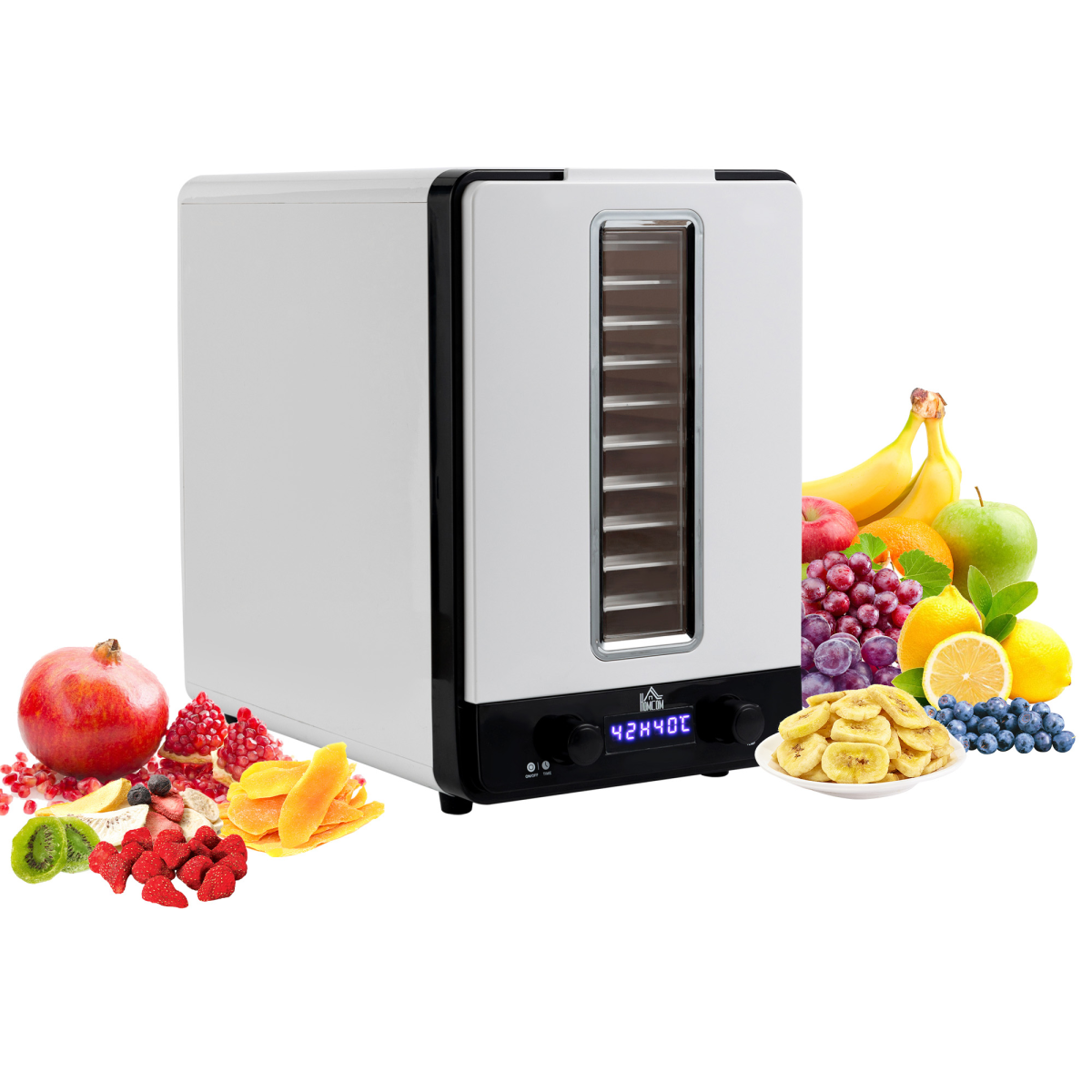
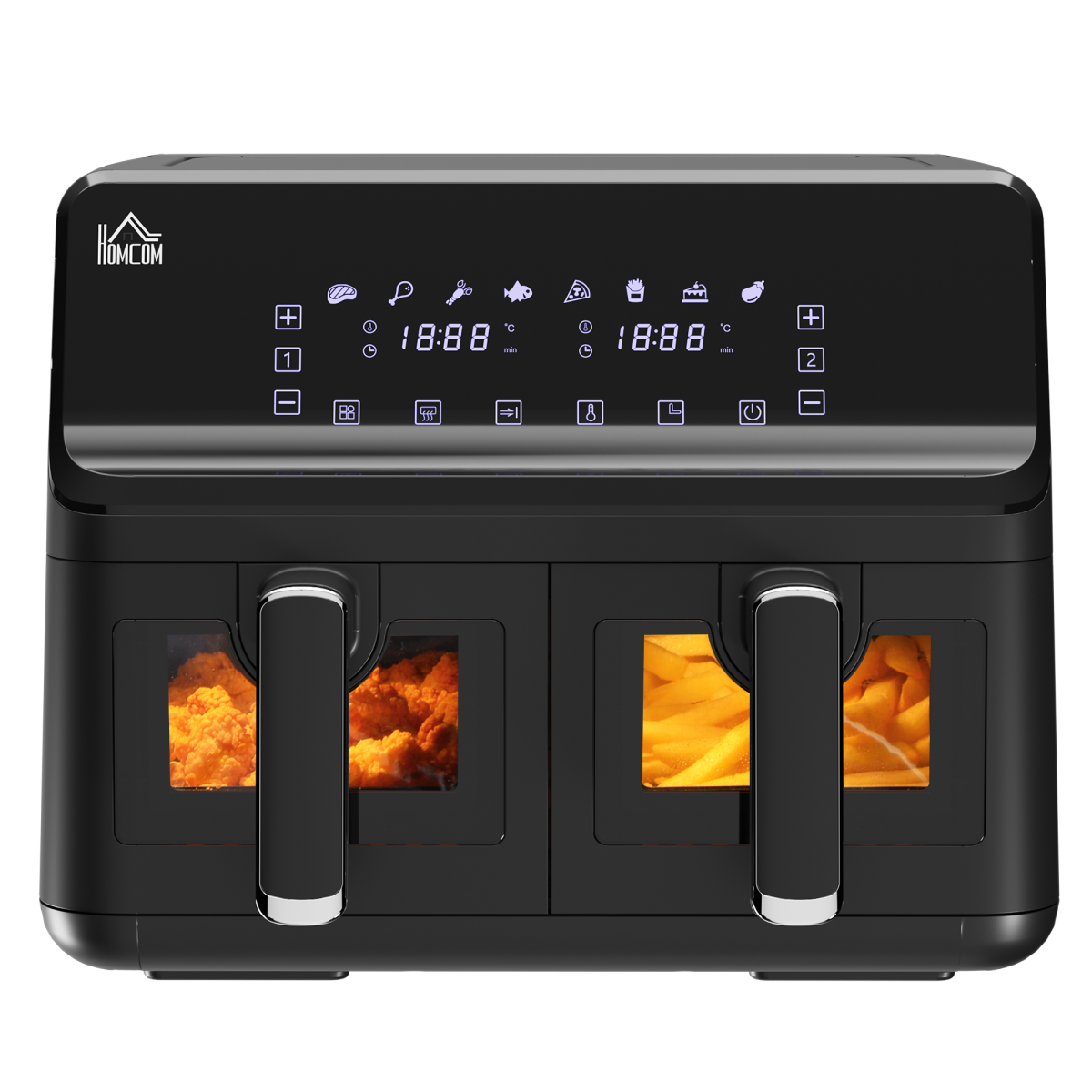
Look for appliances that solve multiple cooking problems simultaneously. An air fryer oven, for instance, can toast, bake, roast, reheat, and air-fry. That's your toaster, your conventional oven for small jobs, your reheating solution, and your quick-cooking method all in one footprint. The HOMCOM 7-in-1 Toaster Oven Air Fryer at iHome Direct combines toasting, warming, baking, and air frying in a single unit, giving you the functionality of multiple appliances without the clutter. At £94.49, it's an investment that actually saves space.

A quality blender can make smoothies, soups, nut butters, and sauces. A food processor handles chopping, slicing, grating, and mixing. A slow cooker can braise, stew, and slow-cook grains. When you buy multi-functional appliances, you're not just saving counter space, you're reducing the mental load of kitchen organisation.
The trick is choosing multi-functional appliances that genuinely combine functions you'll use, not gimmicks. An appliance that toasts, steams, and air-fries is useful if you actually steam food. If you don't, that function is just adding bulk and complexity. Be honest about your cooking style before you buy.
Decluttering Kitchen Worktops: Where to Store What You Actually Use
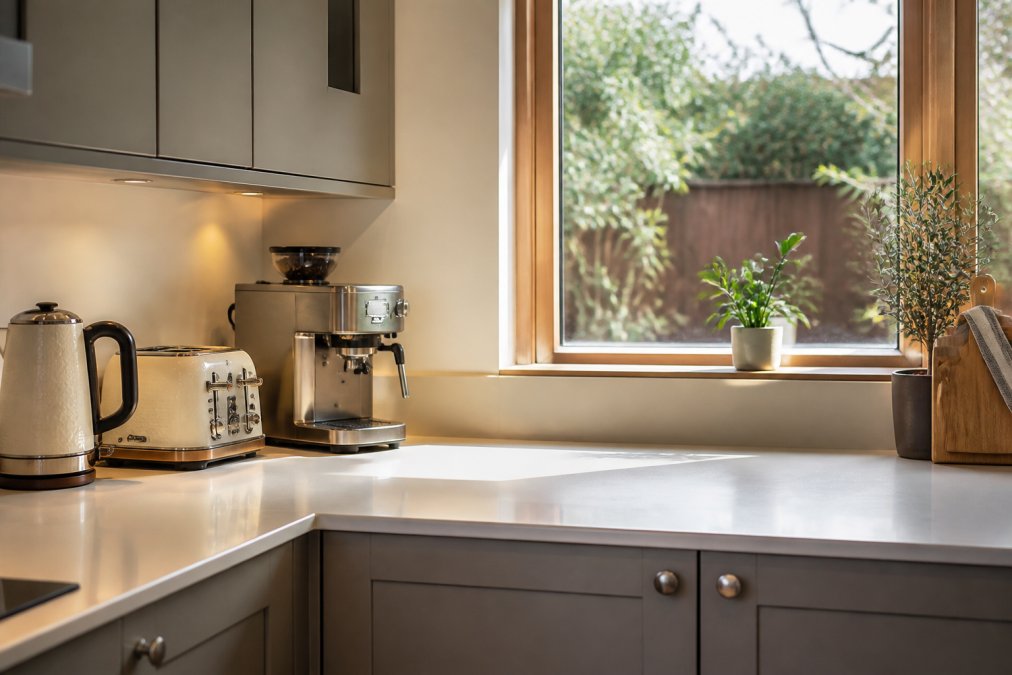
A clear worktop isn't just aesthetically better, it actually changes how you cook. You have more space to prep food. You can see what you're doing. You're less likely to knock things over. The psychology of a functional workspace matters as much as the physics.
Start by removing everything that doesn't live on your worktop. Daily-use appliances stay. Everything else goes into storage. Your goal is to see at least 40 percent of your actual counter surface.
Vertical storage and hidden spots for occasional items
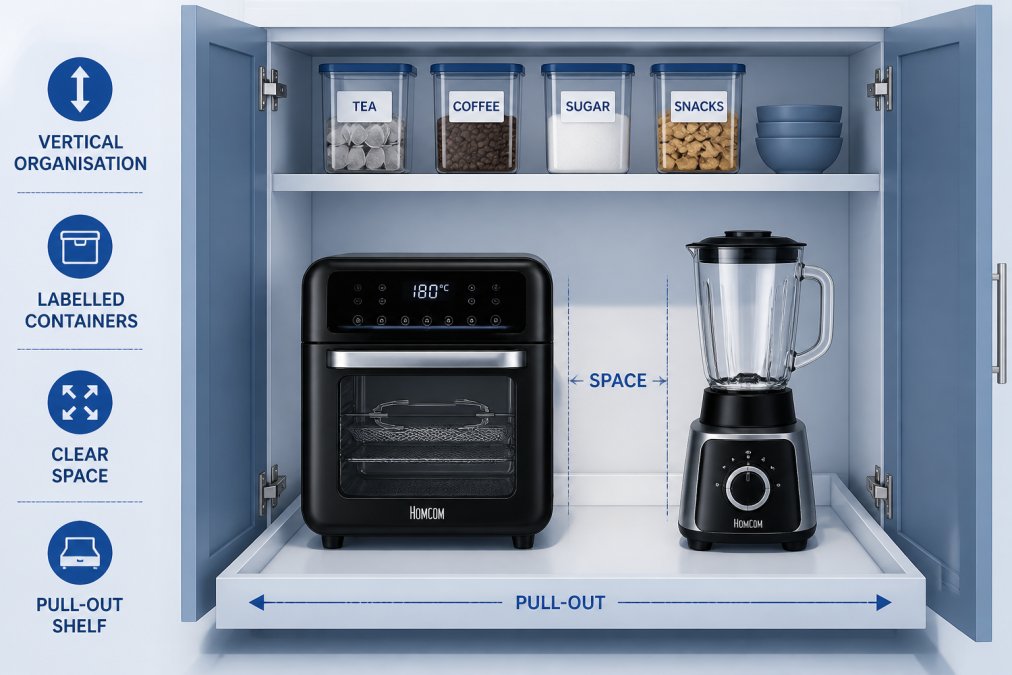
If you're working with limited worktop space, vertical storage becomes your best friend. Wall-mounted shelves above your counter can hold occasional-use appliances without eating into prep space. Pull-out shelves inside cupboards let you access items at the back without removing everything in front.
Under-sink storage works for lightweight occasional items, though avoid placing appliances where plumbing or cleaning supplies are stored. Corner cupboards with rotating shelves maximise awkward spaces. The space above your fridge, if you have one, can hold small appliances you use a few times a year.
The key principle is this: storage that requires you to move something else to access your appliance is worse than no storage. If you have to shift three things to get to your air fryer, you'll use it less often, which defeats the purpose of owning it.
Ergonomic storage for heavy appliances
Heavy appliances like large air fryer ovens or food processors need storage solutions that don't strain your back or shoulders. Shelves at waist height are ideal, high enough that you're not bending, low enough that you're not reaching above shoulder level.
For very heavy items, pull-out shelves or sliding drawers work better than fixed shelves. You can roll the appliance out rather than lifting it down. This matters more than you'd think, especially if you're storing a 3-4 kilogram air fryer oven that you use weekly.
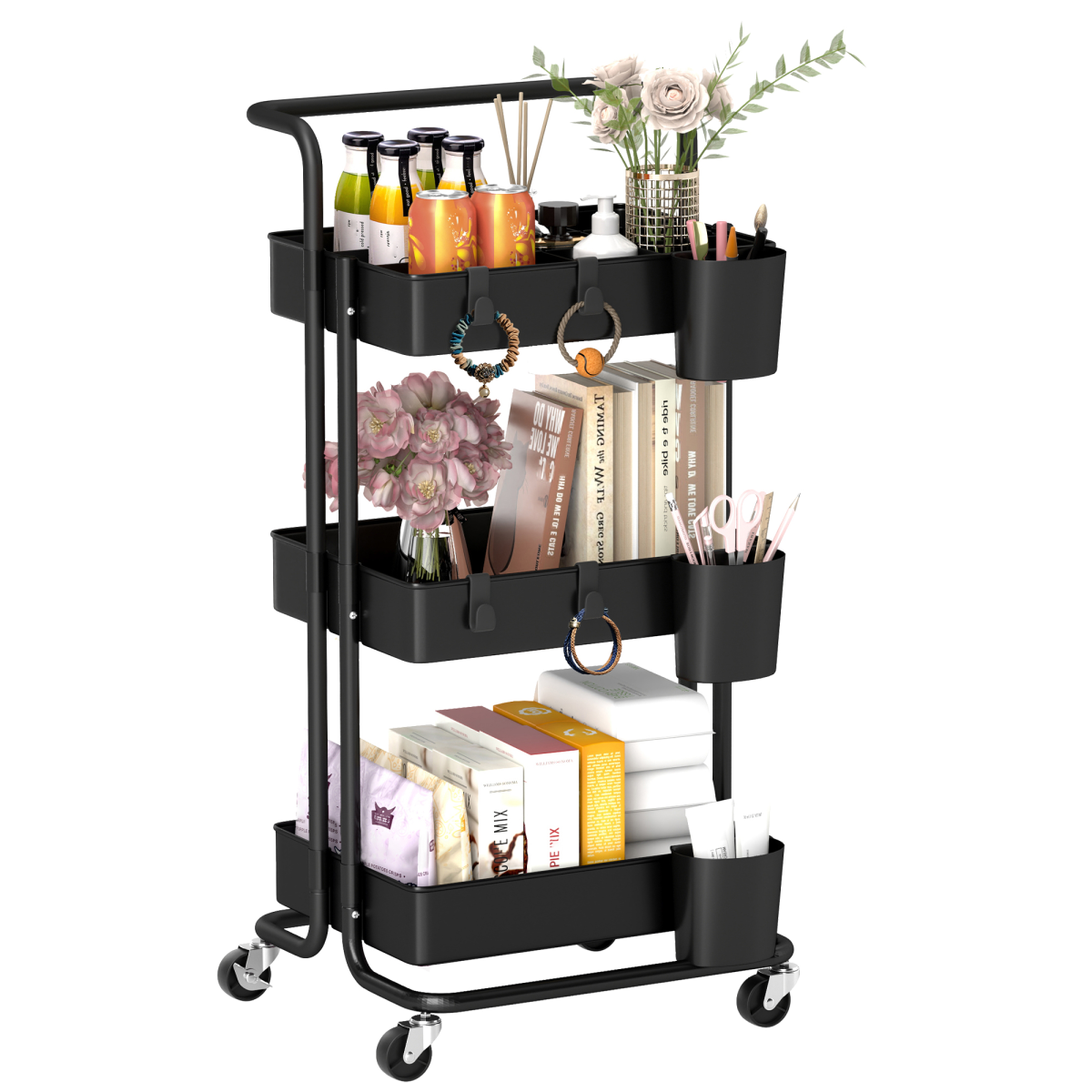
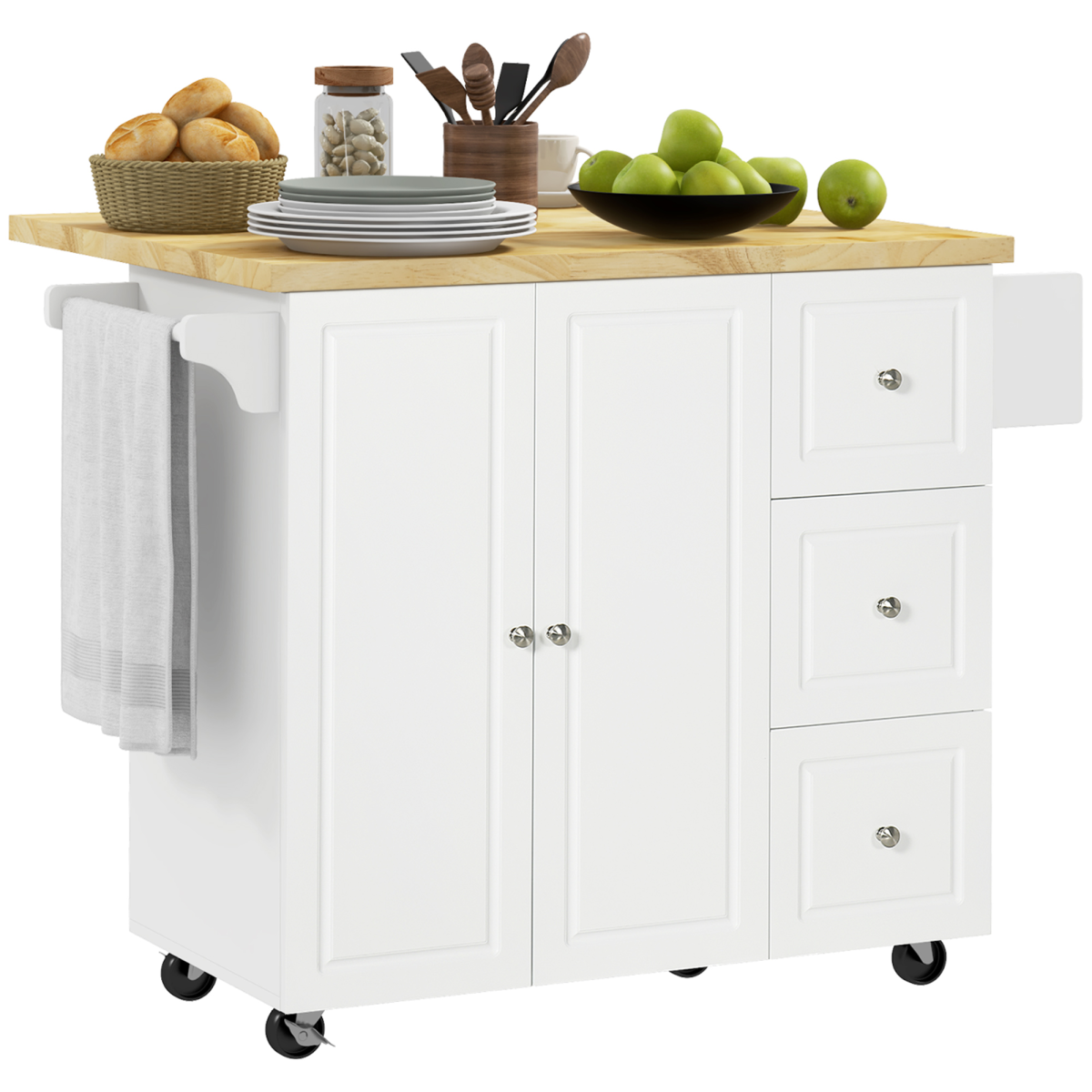
If you're renting and can't install shelving, sturdy kitchen trolleys with wheels give you mobile storage that you can position wherever you need it. You can wheel your occasional-use appliances into a corner and wheel them back to the counter when needed. This is one of the best rental-friendly storage solutions available.
Minimalist Kitchen Appliance Storage: Quality Over Quantity
The minimalist approach to kitchen appliances isn't about deprivation. It's about choosing appliances that genuinely improve your cooking life and letting everything else go. One excellent multi-functional appliance beats five mediocre single-purpose gadgets every single time.
Quality matters more than quantity because you'll actually use quality appliances. A cheap air fryer that heats unevenly and breaks after eight months teaches you nothing except that you wasted money. A good one that lasts years and cooks reliably becomes part of your routine.
When you're choosing which appliances to keep, prioritise the ones that solve problems specific to how you actually cook. If you meal-prep on Sundays, a food processor saves you an hour. If you never meal-prep, it's just clutter. If you eat air-fried food three times a week, an air fryer earns its space. If you've never cooked with one, don't buy it yet.
The HOMCOM 24L Air Fryer Oven from iHome Direct at £95.62 is a good example of quality that justifies its presence. It handles multiple cooking methods, fits standard-sized pizzas, and gives you genuine versatility. One appliance that does several things well is worth more than three that each do one thing poorly.
How to Buy Smart and Avoid the Clutter Trap
The best way to avoid kitchen appliance clutter is to stop buying appliances you don't need before they end up in your kitchen. This requires a purchasing framework that you apply consistently, regardless of sales, recommendations, or how attractive something looks online.
The three questions to ask before every purchase
Before you buy any kitchen appliance, ask yourself three questions. If you can't answer "yes" to all three, don't buy it.
First: Do I have a specific, recurring problem that this appliance solves? Not a theoretical problem. Not something you might do someday. A real problem you encounter regularly. You make smoothies three times a week, so a blender makes sense. You've never made smoothies and probably won't, so a blender is clutter waiting to happen.
Second: Do I have somewhere to store it that won't eat into my daily-use counter space? If the answer is "I'll figure it out later," you won't figure it out. You'll leave it on the counter, and it'll become part of the clutter problem. Know where it lives before you buy.
Third: Will I actually use this, or am I buying the idea of using this? This is the hardest question to answer honestly. You see someone making air-fried chips on social media and think you'll do that weekly. You probably won't. Be ruthlessly honest about your actual behaviour, not your aspirational behaviour.
Rental-friendly storage hacks for temporary spaces
If you're renting, you can't install shelving or make permanent changes. This means your storage options are limited, but they're not non-existent. Kitchen trolleys with wheels are the best solution. They're mobile, they don't require installation, and you can move them out of the way when you need counter space.
Stackable storage boxes that fit inside cupboards let you organise occasional-use appliances vertically without taking up additional shelf space. Over-the-door organisers, while typically used for pantry items, can hold lightweight appliances or instruction manuals.
The most important rental-friendly hack is this: buy fewer appliances in the first place. Every appliance you don't own is one you don't need to store. In a rented flat with limited space, this constraint is actually helpful. It forces you to prioritise ruthlessly.
For renters, the HOMCOM 10L Air Fryer Oven at £51.75 from iHome Direct is a sensible choice because it's genuinely compact. At 10 litres, it handles most cooking tasks without dominating your storage space. Size matters when you don't have much space to work with.
Kitchen appliance clutter happens gradually, one "useful" gadget at a time. But it's preventable if you approach purchases strategically and organise ruthlessly. Start with an honest audit of what you actually own and use. Keep only the appliances that solve genuine problems in your cooking life. Invest in quality multi-functional pieces that earn their space. Store occasional-use items accessibly but out of sight.
At iHome Direct, we offer a curated selection of modern kitchen appliances and home essentials designed to bring both comfort and style to your living space. Our range focuses on multi-functional pieces that genuinely reduce clutter rather than add to it. The HOMCOM air fryer ovens combine multiple cooking methods in a single compact footprint, giving you versatility without the visual chaos. Whether you're setting up your first kitchen or refreshing an existing one, our curated selection of modern, affordable appliances helps you build a functional space that actually works for how you cook. Experience the convenience of our fast UK delivery and secure checkout process as you transform your home today. Explore our range and find the pieces that fit your life, not the other way around.
Frequently Asked Questions
How do I decide which kitchen appliances to keep and which to donate?
Ask yourself three questions: Have I used this in the past three months? Does it serve a purpose my other appliances don't? Will I actually use it in the next six months? If you answer no to any of these, it's likely clutter. Multi-functional appliances, like an air fryer that also toasts and grills, deserve a place in your kitchen because they replace three single-purpose tools. Everything else is taking up space you could use for something you genuinely need.
What are the three things you should never leave on your kitchen counter?
Avoid storing instruction manuals, warranty cards, and rarely-used gadgets on your worktop. These three categories create visual clutter without adding daily value to your kitchen workflow. Instead, keep manuals in a single folder in a kitchen drawer, store warranty information digitally or in a dedicated file, and move occasional-use appliances to a cupboard or high shelf. This frees your countertop for the appliances you use daily, making your kitchen feel more spacious and organised.
Is it better to have fewer high-quality appliances or many cheap ones?
Fewer high-quality appliances win every time. Cheap gadgets often break within months, forcing you to buy replacements and creating more clutter. A single well-made multi-functional appliance, like a compact air fryer oven that bakes, grills, and roasts, costs less over time than buying a toaster, a grill, and an oven separately. Quality appliances also take up less space because they do more. Investing in one reliable tool beats accumulating a drawer full of single-purpose gadgets that end up unused.
How do I make my kitchen look less cluttered without removing appliances I actually use?
Store daily-use appliances in an appliance garage or behind cabinet doors, leaving only your most-used tool on the counter. Use pull-out shelves and vertical storage to maximise space without adding visual clutter. Group similar items together, coffee maker, kettle, and mugs in one zone, so your kitchen feels organised rather than chaotic. Keep instruction manuals and warranties in a single drawer instead of scattered around. These simple changes make your kitchen feel spacious and functional without sacrificing the tools you rely on.
This article was written using GrandRanker